Testing times!
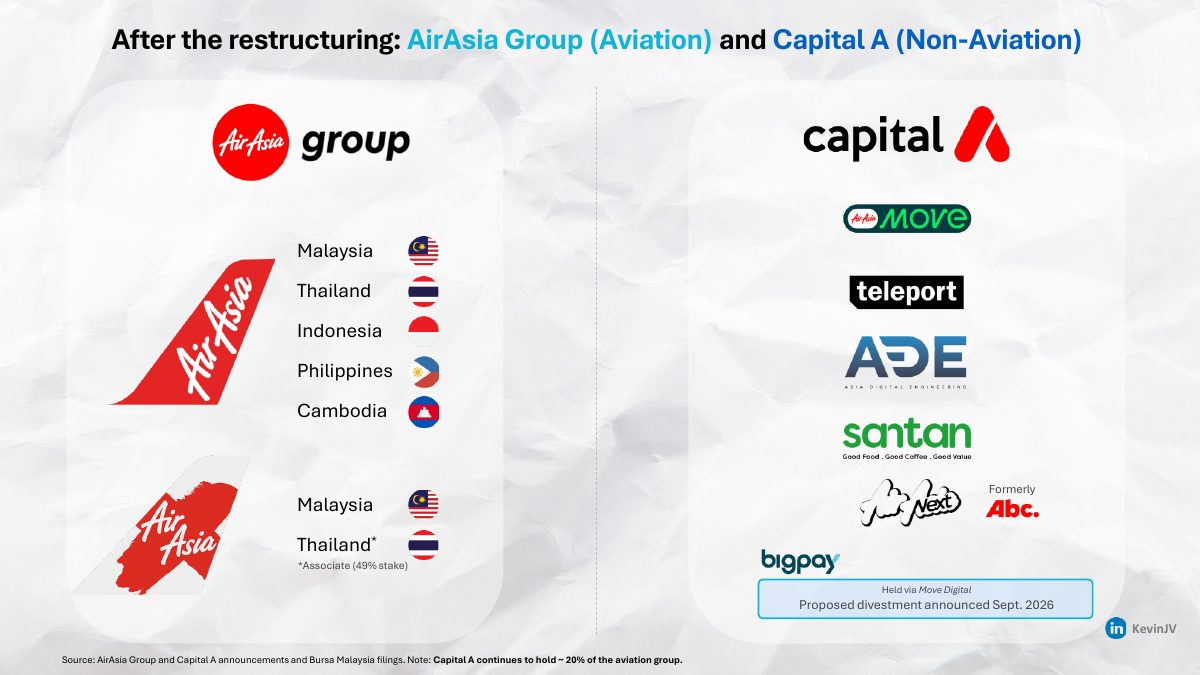
In Jan 2026, Capital A sold its aviation business to AirAsia X, bringing the airlines under one platform. In July, AirAsia X became AirAsia Group Berhad.
The structure is now clean. AirAsia Group holds core aviation. Capital A holds the rest.
The logic behind the separation was straightforward: bring the airlines under one platform, centralise fleet and network decisions, improve aircraft utilisation and remove years of fragmentation.
But the timing could hardly have been worse.
In Q2 2026, AirAsia Group reported a US$208 million net loss. Jet fuel costs rose 66% QoQ. At 30 June, the group carried US$4.6 billion of current liabilities against US$239 million of cash.
And critically, AirAsia entered the fuel shock without a meaningful fuel hedge. Management had been preparing a hedging programme, but it was put on hold as prices surged and liquidity tightened.
The response is already well beyond conventional cost-cutting. Underperforming routes are being cut. 25 older aircraft have been returned to lessors. Vendor contracts are being renegotiated. Q3 capacity is down 20-25% year-on-year. And the group is seeking up to $1 billion of funding plus ~$175 million of local facilities to refinance and restructure debt.
The issue has also moved beyond the company. The Malaysian government has engaged Alton Aviation to assess AirAsia's funding needs, while Reuters reports that officials have explored contingency scenarios with Malaysia Airlines and Batik Air around AirAsia's domestic network.
AirAsia says there have been no bailout discussions and that it has sufficient liquidity to keep operating. Its Malaysian AOC was renewed this week through Sep 2029.
Why the restructuring matters
Consolidating the airlines creates a more coherent platform: one network, greater flexibility in fleet deployment, higher utilisation potential and the prospect of lower unit costs.
But it also concentrates the risk. The group now carries the full burden of the aviation business: fuel exposure, fleet commitments, operating costs, country-level complexity and a heavily leveraged balance sheet.
So the value of consolidation will ultimately depend on one thing: whether those operating synergies can translate into margin-accretive growth and cash generation.
Why sequencing matters
AirAsia identified Bahrain as a potential strategic hub outside Southeast Asia, with plans to develop connectivity between Asia, the Middle East and Europe.
The opportunity is clear. But before it can build aggressively again, it needs to stabilise the base.
That means restoring unit economics, improving utilisation, rebuilding earnings and generating the cash needed to reduce balance-sheet pressure.
Then scale.
Only then can expansion become margin-accretive growth, rather than simply adding more capacity and complexity to the balance sheet.
#airasia #capitalA #restructuring
First published on LinkedIn, see the original.All writing →