Ever heard of not-for-profit airports?
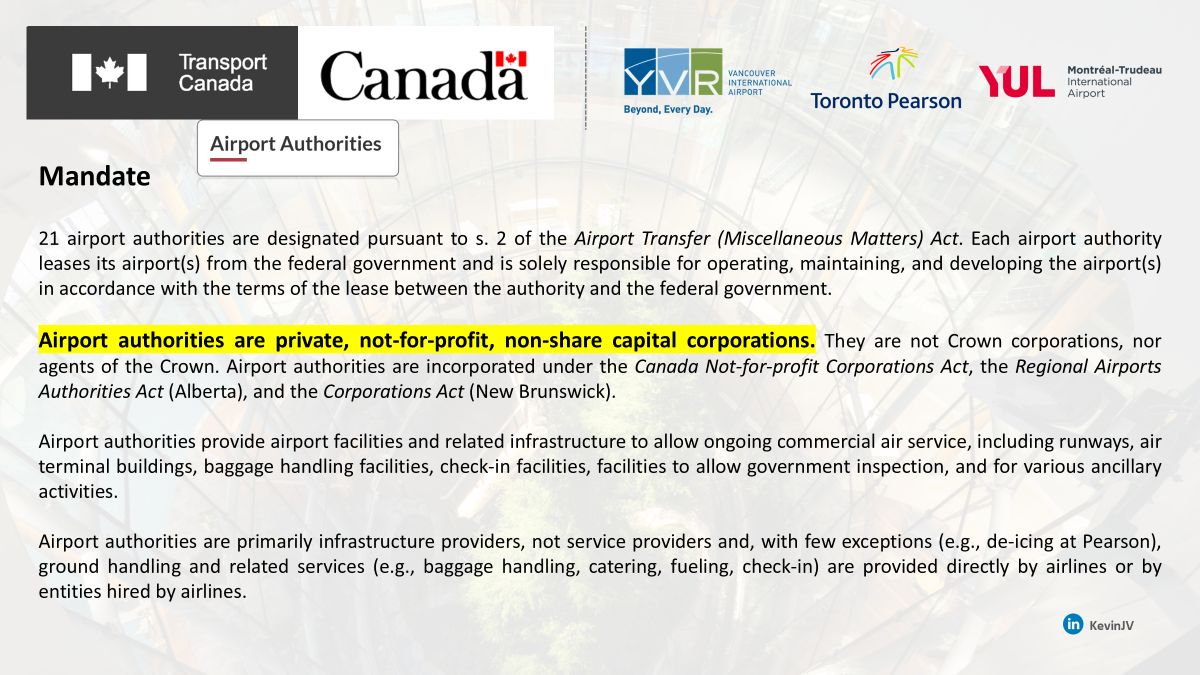
Canada’s biggest airports, including Toronto Pearson, Vancouver and Montreal are not corporatised, not publicly listed, and not government-run. Instead, they operate under a unique not-for-profit authority model.
The land and facilities remain federally owned, but operations are leased long-term to independent airport authorities. These entities have no shareholders, no dividends, and no equity capital. Surpluses are fully reinvested into infrastructure, funded largely through user charges and airport improvement fees (AIFs). Governance is local, with boards drawn from community stakeholders (too).
The result? Billions invested in airport upgrades, global service accolades (Vancouver ranked “Best Airport in North America” by Skytrax for 14 times in the last 16 years), and Canadian air transport infrastructure ranked #1 in the world by the World Economic Forum. The flip side: high passenger fees, heavy debt loads, and limited financial flexibility compared to for-profit or PPP peers (especially during COVID, as alluded to by a former top executive).
It’s a model that has delivered world-class service without shareholder pressure, but at the cost of some of the highest aviation charges globally.
Canada’s approach highlights an interesting alternative, and it doesn’t get nearly enough attention.
>Could the future of airport governance lie not in privatisation or state control, but in this third model of community-based, not-for-profit stewardship?
First published on LinkedIn, see the original.All writing →