Boeing’s Tariff Nightmare
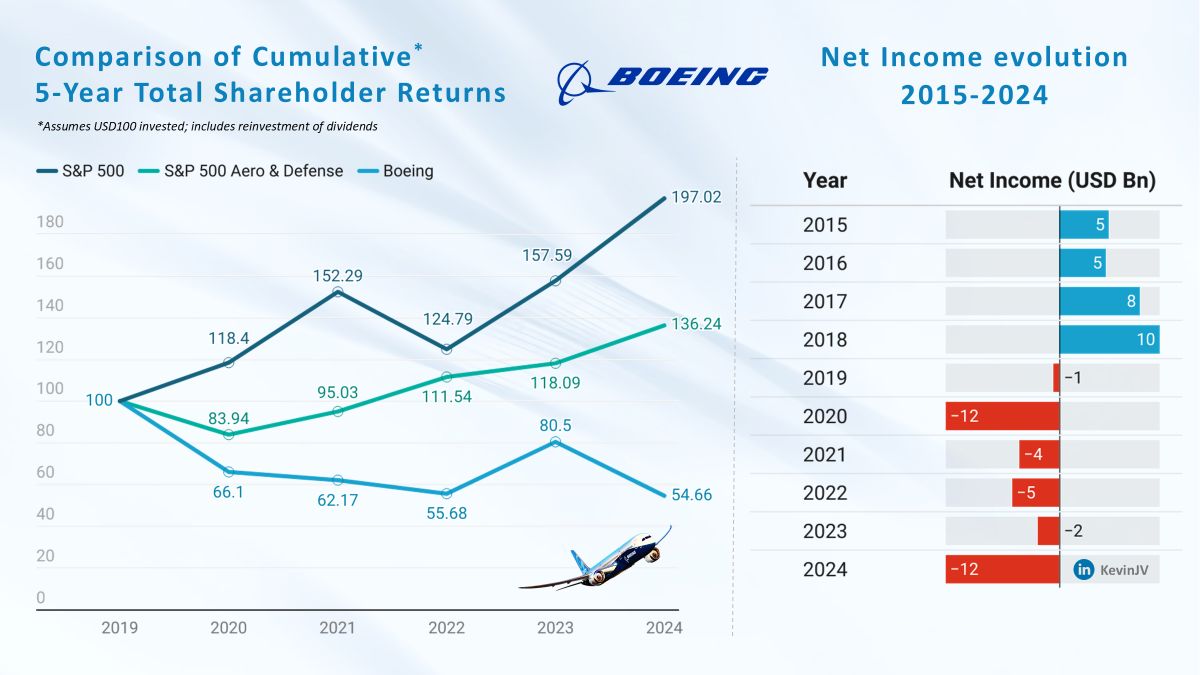
The Trump administration’s 5 tariffs - on steel, aluminium, and imports from Canada, Mexico, and China are hitting Boeing at the worst possible time. With accumulated losses surpassing $34 billion since 2019 - including a staggering $12 billion loss in 2024 alone - Boeing now faces intensified financial challenges.
Here's the detailed impact and why this matters:
📌 Sharp Rise in Manufacturing Costs
>Boeing explicitly cautioned in its annual report that tariff-driven cost increases or material shortages (aluminium, steel, titanium, composites) could jeopardize timely and cost-effective aircraft deliveries.
>AerCap CEO Aengus Kelly quantified this risk, highlighting a potential cost spike of upto $40 million for a 787 - representing a dramatic 10-20% per aircraft increase.
📌 Complex and Costly Cross-Border Supply Chains (Mexico & Canada)
>About $8 billion worth of aerospace products imported annually from Mexico face baseline tariff costs of around $2 billion. True costs would escalate further because many aerospace components cross the border multiple times.
Example: A steel gear machined in Mexico could cross into California for heat treatment and then back to Mexico for final assembly, compounding tariff costs.
>Canadian aerospace imports total roughly $10 billion annually, including Pratt & Whitney engines, CAE simulators, and landing gears.
>Potential tariffs here could add another $2.5 billion annually, excluding impacts on MRO, significantly affecting costs and ops.
📌 Boeing’s Competitiveness at Risk
Airbus maintains a largely European-centered supply chain (95% Europe and OECD-based), significantly insulating it from similar cost pressures.
Steep increases in aircraft prices could prompt airlines to switch to Airbus and might very well be a shot in the arm for Comac and erode Boeing's market share further.
⚠️ Given Boeing’s severe financial challenges, the company faces a crucial strategic dilemma: whether it can realistically transfer increased costs from tariffs to airlines/ lessors.
📌 Strategic Implications of Passing On Costs:
>Passing costs entirely onto customers risks a market-share loss, with airlines potentially shifting loyalty to Airbus.
>Conversely, Boeing absorbing tariff-related costs internally exacerbates financial strain, increasing already steep losses and possibly constraining investment in innovation, product development, and growth.
📌 Likely Scenario - A Shared Burden
>Boeing will likely pursue a partial pass-through of these costs, balancing price increases to airlines with internal cost absorption to maintain market share and competitiveness.
The net result: reduced profitability (or increased losses) unless tariff exemptions or strategic supply-chain realignments emerge.
(This write-up is for educational/informational purposes only; happy to amend inaccuracies, if any)
First published on LinkedIn, see the original.All writing →